
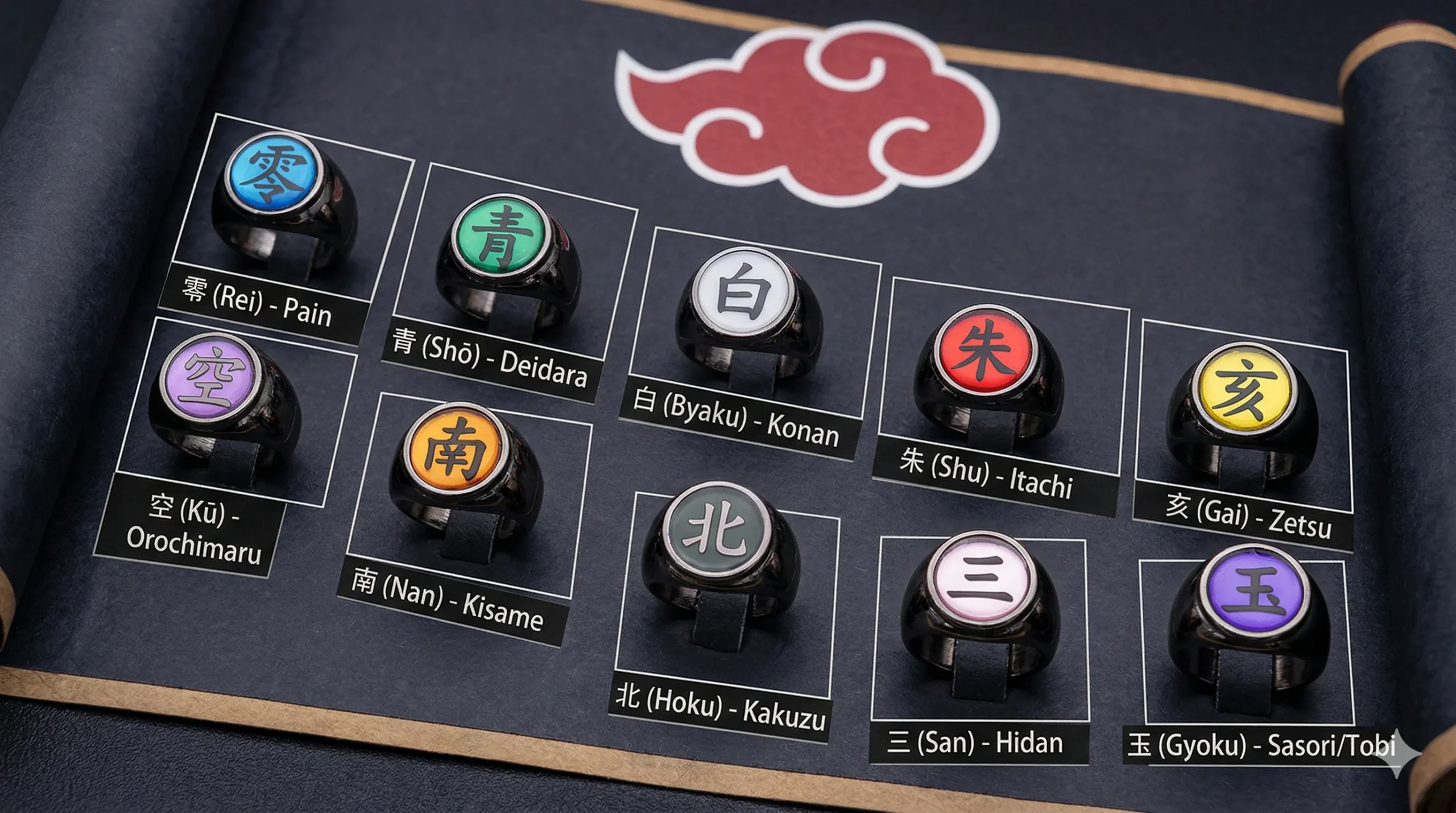
When anime fans think of the Akatsuki from Masashi Kishimoto’s legendary series Naruto, a few striking visual cues immediately come to mind: the iconic black cloaks adorned with red clouds, the slashed hidden village headbands, and the painted nails. However, there is one accessory that is constantly hidden in plain sight, carrying immense weight yet shrouded in absolute mystery: the Akatsuki rings.
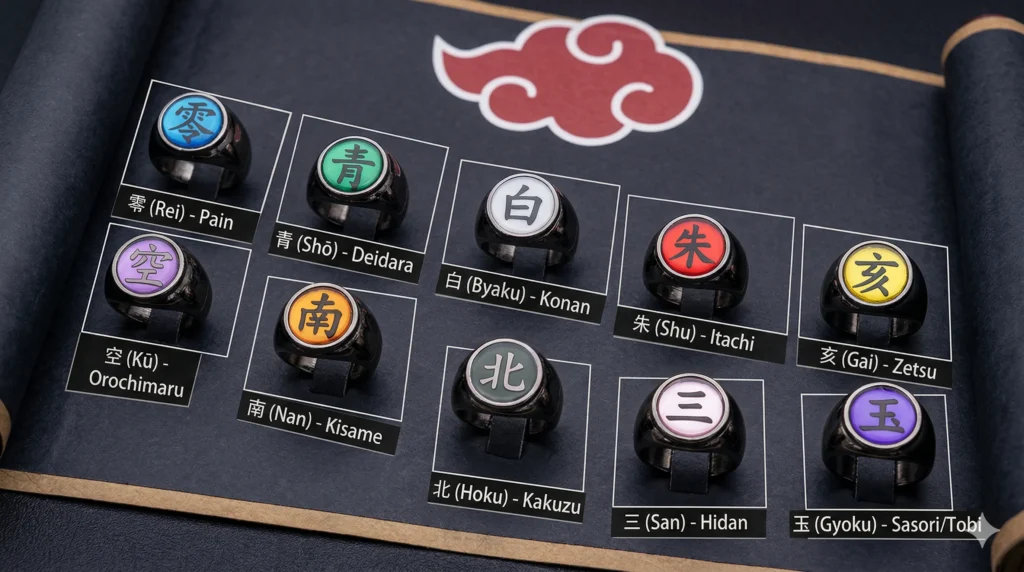
Despite being featured prominently throughout the series and heavily implied to hold deep significance for the organization, the exact mechanics, origins, and full purpose of these akatsuki rings are never directly explained.
So, what do these rings actually do? Let’s dive into one of the most prominent, yet least explained, mysteries in the Naruto universe and explore how this intentional ambiguity elevates the series’ storytelling.
Far More Than Mere Accessories
To the casual observer, the rings worn by the Akatsuki members might seem like a simple uniform requirement—a stylized piece of jewelry to tie the rogue ninjas together. However, the series goes out of its way to prove that these rings are of critical importance to the organization’s structure.
The most glaring example of this occurs with Deidara. After a brutal encounter where his arm is severed, his immediate priority isn’t seeking medical attention for his lost limb. Instead, he is completely fixated on finding his severed arm specifically to retrieve his Akatsuki ring.
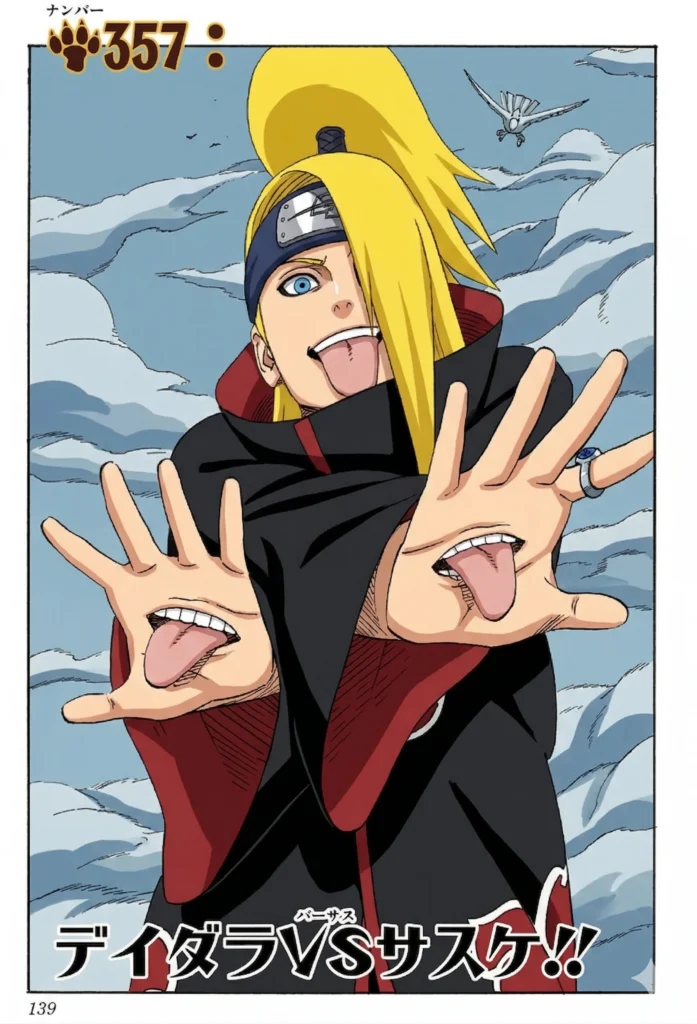
This desperate search indicates that an Akatsuki ring is not easily replaceable. It is a literal key to their membership. Furthermore, when Orochimaru defected from the organization, he took his ring with him. The Akatsuki never replaced him, strongly implying that without the ring, a new member cannot be fully inducted. The ring is the seat at the table.
The Deep Symbolism: The Kuji-in Connection
The rings are not just functional; they are steeped in deep real-world mythology and symbolism. The kanji (symbols) inscribed on the rings are not randomly selected.
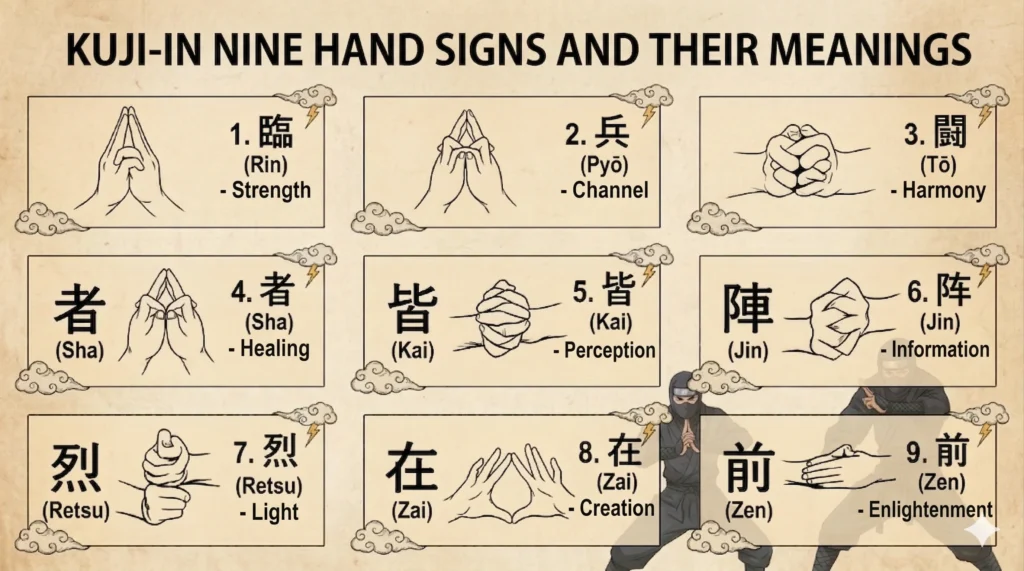
- The Kuji-in Roots: Eight of the ten rings feature kanji derived from the kuji-in, a set of nine hand seals traditionally used in Ninjutsu and Buddhist meditation practices. These seals are meant to invoke spiritual or physical strength, aligning perfectly with the god-like complexes of the Akatsuki members.
- The Exceptions: Intriguingly, two rings break this rule. Pain’s ring bears the kanji for “Zero” (Rei), and Zetsu’s ring bears the kanji for “Boar” (Gai).
Why do the leader and the spy of the organization break the kuji-in naming convention? The series leaves this question completely unanswered, creating a lingering mystery that fans still theorize about to this day.
Functional Purpose: The Tailed Beast Sealing Ritual
Beyond symbolism and membership status, the rings serve a highly functional, albeit vaguely defined, purpose within the Akatsuki’s ultimate goal: capturing and sealing the Tailed Beasts (Bijuu).
Whenever the Akatsuki gathers to extract a Tailed Beast from a Jinchuriki, they summon the Demonic Statue of the Outer Path (Gedo Mazo). During this painstaking, multi-day ritual:
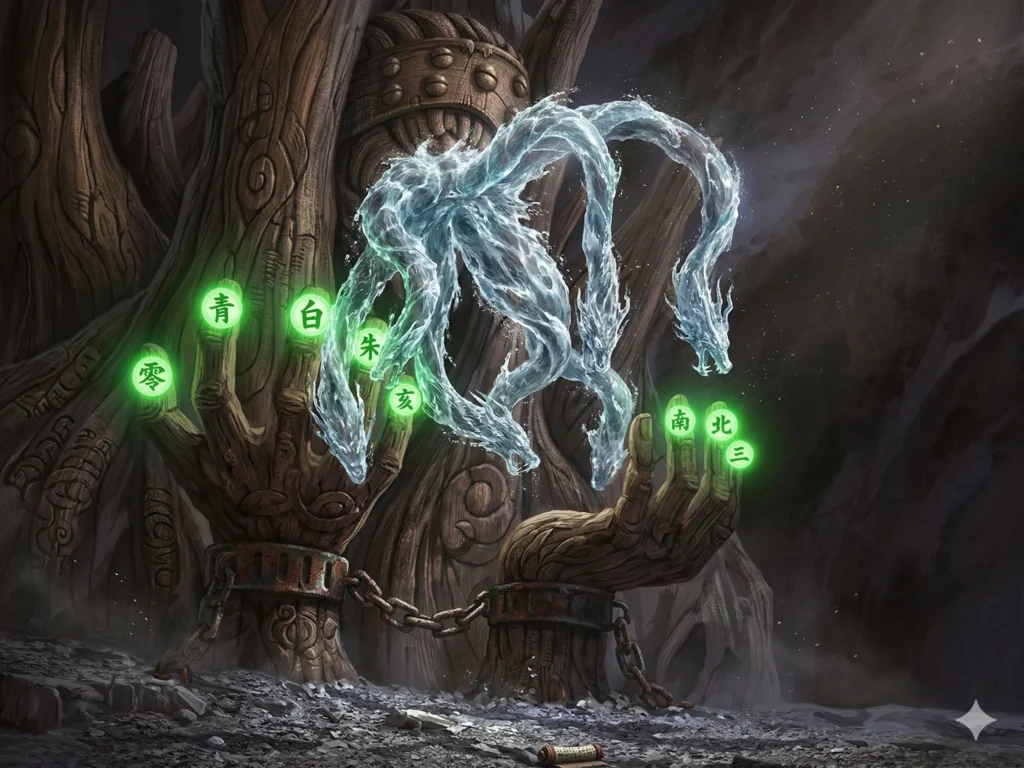
- Each member must stand on the exact finger of the statue that corresponds to the finger on which they wear their ring.
- The rings act as a conduit, allowing members to project their astral forms into the hideout from anywhere in the world.
“The rings are the anchor. They bridge the massive physical distances between these S-rank criminals, funneling their immense chakra into a single, devastating ritual.”
Yet, the actual mechanics of this system—how the rings were forged, who created them, and why they specifically link to the Gedo Statue—are mechanics the audience is left to piece together on their own.
Masashi Kishimoto’s Masterclass in Visual Storytelling
Is the lack of explanation regarding the Akatsuki rings a plot hole? Not at all. In fact, this ambiguity is a staple of Naruto’s overarching storytelling style.
Masashi Kishimoto frequently relies on visual storytelling over heavy-handed exposition. Rather than bogging the pacing down with pages of dialogue explaining the metallurgical origins of ten rings, Kishimoto shows their importance through action (like Deidara’s panic) and visual cues (the Gedo Statue seating arrangement).
This method mirrors other elements in the Naruto universe:
- Chakra’s Origins: For a vast majority of the series, the true, alien origins of chakra were left to myth and legend.
- The Uchiha Clan: The exact biological and spiritual mechanics of the Sharingan were slowly unpeeled, often leaving more questions than answers until the series’ climax.
By leaving the Akatsuki rings slightly unexplained, Kishimoto preserves the mystique and danger of the organization. If everything about a villainous cult is explained down to the finest detail, they lose their edge. The unanswered questions force the audience to use their imagination, cementing the Akatsuki not just as powerful ninjas, but as an ancient, almost supernatural force moving in the shadows of the shinobi world.
Conclusion
The Akatsuki rings remain one of the most fascinating pieces of world-building in anime history. They represent status, spiritual symbolism, and terrifying functional power, all while leaving just enough in the dark to keep fans guessing. In the world of Naruto, sometimes the most powerful stories are the ones told without a single word.
Source: CBR
Latest Article: The Manga “A Certain Scientific Railgun” Concludes, Closing the Curtain on a 19-Year Run
